
3-Day Marrakech to Sahara Desert Tour
A classic round trip from Marrakech into the Sahara — a first day through the Atlas passes and Ait Ben Haddou before reaching the dunes, with your night under the stars at Erg Chebbi on night two, then the drive back to Marrakech.
Overview
A classic round trip from Marrakech into the Sahara — a first day through the Atlas passes and Ait Ben Haddou before reaching the dunes, with your night under the stars at Erg Chebbi on night two, then the drive back to Marrakech.
This is a 3 Days / 2 Nights private tour for your group only, starting with pickup from your accommodation in Marrakech and finishing back in Marrakech. You travel in a private 4x4 or minivan with driver-guide, so the pace, stops and photo breaks are set around you.
Gallery




Highlights
- ✓Cross the High Atlas at the Tizi n'Tichka pass
- ✓Walk the kasbah at Ait Ben Haddou and see the film studios at Ouarzazate
- ✓Drive the canyon roads of Todra Gorge and Dades Valley
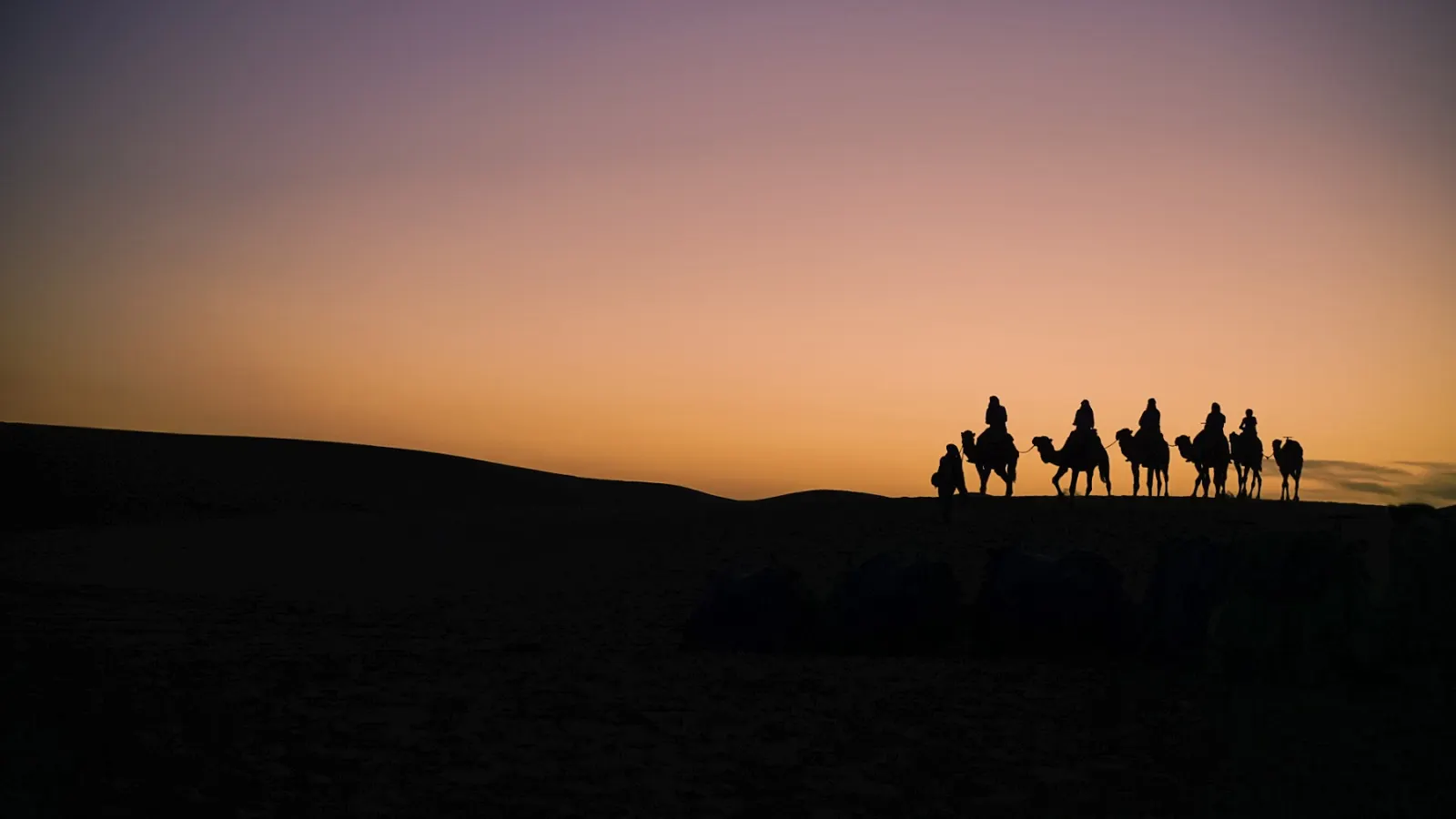
- ✓Camel trek into the Erg Chebbi dunes at sunset and camp overnight
- ✓Watch sunrise over the dunes before the drive home
Day-by-day itinerary
Marrakech to Dades Valley via Ait Ben Haddou
We leave Marrakech in the morning and start climbing almost immediately — within an hour you're on the Tizi n'Tichka, the pass road that carries every desert route over the High Atlas. It's a genuine mountain crossing: switchbacks well above 2,000 meters, Berber villages built straight into the hillside, and roadside stalls selling argan oil and local minerals where we'll stop if you want to stretch your legs. On the far side, we pull in at Ait Ben Haddou, Morocco's best-known kasbah and a UNESCO World Heritage Site — a cluster of earthen buildings on a hillside, still lived in, and familiar from a number of international film and TV productions. The path inside is uneven stone, so wear shoes you can walk in, and give it 45 minutes to an hour to actually explore rather than just photograph from outside. From there it's a short hop to Ouarzazate — nicknamed "the Hollywood of Morocco" for the film studios on its edge — where we can stop at the Taourirt Kasbah before continuing on to the Dades Valley for the night, arriving with enough daylight left to see the valley's rock formations before dinner.
Dades Valley to Merzouga
This is the longest driving day, and also the most dramatic. We start with the Dades Gorge's switchback road, then continue through Todra Gorge, where sheer canyon walls close in to around 300 meters on either side — one of the more striking pieces of road in the whole country, and worth the short walk in if we have time to stop. From there the landscape starts to change: palm groves thin out, the road runs past Erfoud, known locally for its fossil workshops (Morocco's Anti-Atlas region is rich in trilobite and ammonite fossils, and small roadside shops sell polished pieces), and the land flattens toward the desert's edge. By late afternoon we reach Merzouga, where the vehicle stops and camels take over — there's no driving into the dunes themselves. The ride out to camp takes about an hour and lands you in the Erg Chebbi dune field right around sunset, when the sand shifts through orange and red as the light drops. Camp is a Berber-style tent setup with dinner and, most nights, some live drumming around the fire before everyone turns in — it gets properly cold after dark even when the day was hot, so bring a layer.
Merzouga to Marrakech
Mornings in the desert start early — you're usually woken before sunrise to climb a nearby dune and watch the light come up over Erg Chebbi, which is genuinely one of the best moments of the trip and takes maybe 20-30 minutes once you're up there. Camels (or a 4x4, if you skipped the ride out) bring you back to the vehicle for breakfast, and then it's the long drive home: back through the Draa Valley, Morocco's longest palm-lined oasis, and over the Atlas again, arriving in Marrakech by early evening. It's a full day of driving with photo stops rather than sightseeing stops, so it helps to come into it with realistic expectations — the desert night is the main event, and this day is largely about getting back.
✓ Included
- ✓Pick-up in Marrakech and drop-off in Marrakech
- ✓Private trip — your group only
- ✓Private transportation in an air-conditioned, comfortable vehicle (van or 4WD SUV)
- ✓Fuel and all vehicle expenses
- ✓Private English-speaking, well-experienced driver-guide for the whole trip
- ✓1 night hotel/guesthouse in the Dades Valley
- ✓1 night desert camp near Merzouga, including camel trek
- ✓Breakfast every morning at your hotel, riad or desert camp
- ✓2 dinners — 1 in the Dades Valley and 1 in Merzouga
- ✓Sunset and sunrise dune experiences
- ✓Sandboarding at the desert camp (optional)
- ✓Pick-up and drop-off at your hotel or riad every day
✕ Not included
- ✕Lunches
- ✕Drinks and bottled water
- ✕Entrance fees at Ait Ben Haddou, the film studios, and other sites
- ✕Tips and personal expenses
- ✕Travel insurance
Route map
Frequently asked questions
Is this the same route as your 3-day tour that ends in Fes?
The first two days are similar, but this one loops back to Marrakech instead of continuing north — pick whichever city you need to end in.
Is this a private tour or a shared group departure?
Fully private — your own vehicle, driver-guide, and schedule for all 3 days. No joining a bus of other travelers.
How long is the drive to Merzouga, and is day 2 exhausting?
Day 2 (Dades Valley to Merzouga) is the longest driving day on this route, taking in Todra Gorge and the fossil town of Erfoud before the desert. It's a full day, but broken up with real stops, not a straight highway push.
Can non-riders skip the camel trek?
Yes — a 4x4 transfer into the camp is available in place of the camel for anyone who'd rather skip the ride.
What happens during the desert camp night?
Arrival by camel around sunset, a Berber-style tent, hot dinner, and often some live drumming by the fire. It turns cold fast after dark even on a warm day, so a proper layer is worth having.
Is the sunrise wake-up call worth it?
Most travelers say yes — it's a short, easy climb up a nearby dune, takes about 20-30 minutes, and is one of the more memorable parts of the trip. It's optional if you'd rather sleep in.
Is this suitable for families with kids or older travelers?
Generally yes — the camel ride is gentle, and driving days include regular stops. Let us know ages and any mobility concerns when booking so we can flag anything worth planning around, like the uneven paths at Ait Ben Haddou.
What should we pack?
Layers above all: warm days in the mountains and desert, cold nights in the dunes. Comfortable closed shoes, sun protection, and a scarf for dust and wind round it out.
What's the best time of year for this route?
Spring and autumn keep daytime temperatures comfortable for the mountain and desert legs alike; summer in the Sahara runs very hot, and winter nights in the dunes are cold — pack layers whatever the season.
Are entrance fees to Ait Ben Haddou and the film studios included?
No, entrance fees aren't included in the tour price — they're inexpensive and paid on-site, so it's worth carrying some cash in dirhams for those stops.
Customize your journey with Through Morocco
Want to add a day, skip a stop, or travel at a different pace? This itinerary is a starting point — tell us what you have in mind and we'll adjust the route.
Have a question?
We're here to help you plan your Morocco trip. Send us a message and our team will reply with availability, pricing, or a personalized itinerary just for you.
Contact us on WhatsApp
Marrakech Desert Express: 3 Days to Merzouga
The most direct route from Marrakech to the Sahara and back — you're on the road to Merzouga from the very first morning, camping under the dunes on night one, then looping home past Ait Ben Haddou and the Atlas on the way back.
- Cross the Tizi n'Tichka pass through the High Atlas
- Walk Ait Ben Haddou and see Ouarzazate on the way
- Camel trek into the Merzouga dunes and camp overnight
- Back in Marrakech on the evening of day 3

4-Day Desert Tour from Marrakech to Merzouga
A round trip from Marrakech to the Sahara with an extra day worked into the return leg — the same Atlas and kasbah route out, plus Rissani's market and a Kasbah Telouet stop on the way back.
- Cross the High Atlas at the Tizi n'Tichka pass
- Visit Ait Ben Haddou and the film studios at Ouarzazate
- Camel trek into the Erg Chebbi dunes for an overnight camp
- Browse Rissani's trading-town market on the return

5-Day Marrakech to Merzouga Desert Tour
A five-day loop that trades one long push through the desert for two separate nights around Merzouga, plus a stop at the remote Kasbah Telouet on the way home.
- Cross the High Atlas at the Tizi n'Tichka pass
- Visit Ait Ben Haddou and the film studios at Ouarzazate
- Two nights around Merzouga — Khamlia's Gnawa musicians and a nomadic family visit
- A second sunset camel trek into the Erg Chebbi dunes

3-Day Marrakech to Fes Desert Tour via Merzouga
A one-way desert crossing from Marrakech to Fes — kasbahs and canyons on the way down, a night in the Merzouga dunes, and cedar forest on the way in.
- Cross the High Atlas at the Tizi n'Tichka pass
- Visit the UNESCO kasbah of Ait Ben Haddou
- Camel trek into the Erg Chebbi dunes for an overnight camp
- Pass through the Middle Atlas cedar forest, home to Barbary macaques